

Skin Cancer
Every year more people are diagnosed with skin cancer than all other cancers combined. Early detection saves lives.
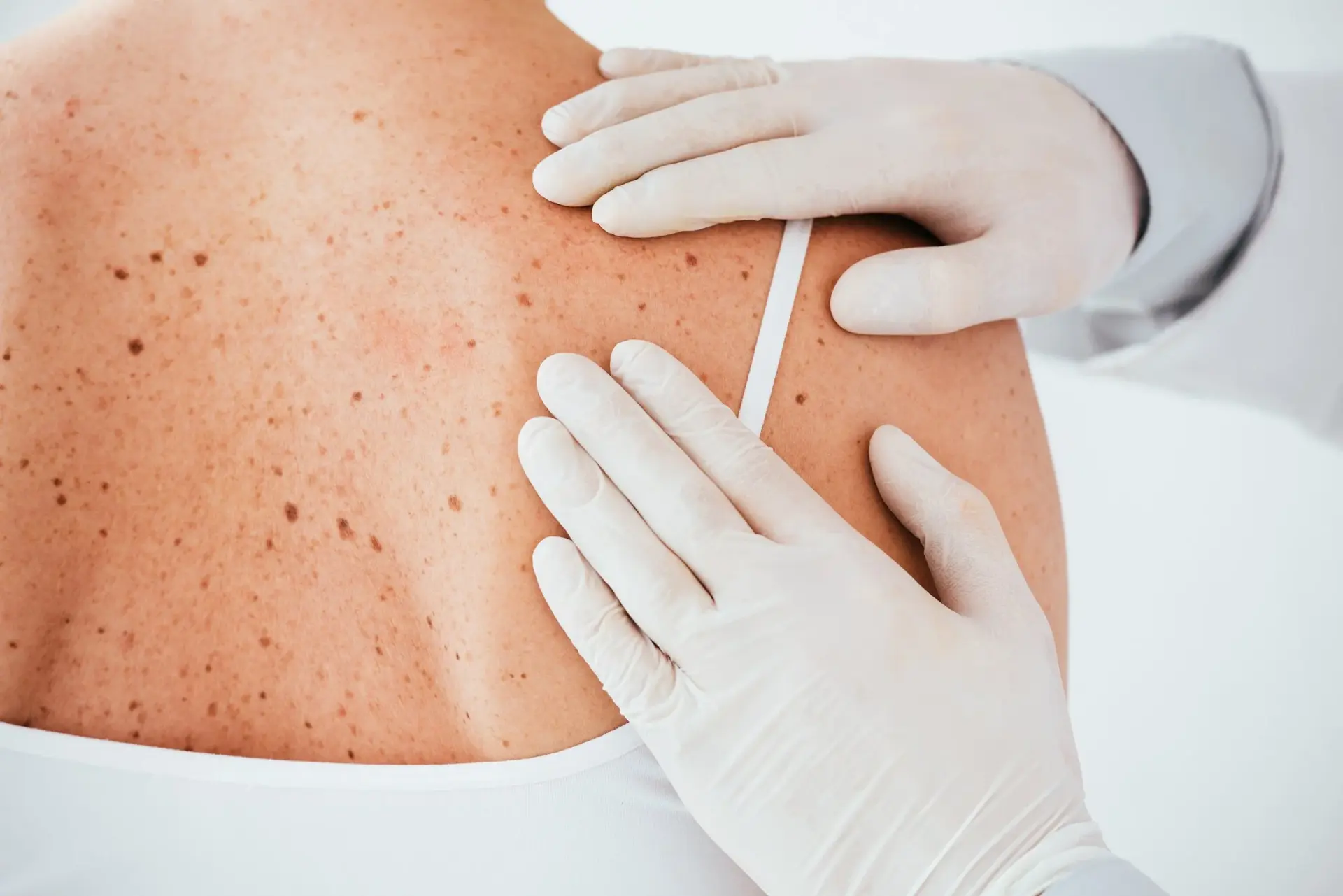
Understanding Skin Cancer
Every year more people are diagnosed with skin cancer than all other cancers combined. Skin cancer commonly occurs on sun-exposed skin. Those at highest risk are fair-skinned individuals and those who spend a significant time in the sun for work or outdoor activities. Better prognoses result from early skin cancer diagnosis and treatment.
There are two main categories of skin cancer: melanoma and nonmelanoma skin cancers (NMSC). Approximately 80% of skin cancers are basal cell carcinoma (BCC), 16% are squamous cell carcinoma (SCC), and 4% are melanomas. At least one in five Americans will develop skin cancer by age 70.
Treatment options vary based on the type of skin cancer, the size, location, and depth of the tumor, as well as age and health of the patient. Options include surgical excision, Mohs micrographic surgery, radiation therapy, topical treatments, immunotherapy, and chemotherapy. The majority of skin cancer treatments can be performed in the office under local anesthesia.
FAQ
Common Questions
What causes skin cancer?
90% of nonmelanoma skin cancer, and 86% of melanomas are associated with UV radiation. More people develop skin cancer from indoor tanning than lung cancer from smoking. 5 or more sunburns double the risk for developing melanoma. Just one blistering sunburn in childhood or adolescence more than doubles the lifetime risk of developing melanoma.
How is skin cancer diagnosed?
Board certified dermatologists are formally trained to identify suspicious skin lesions using instruments like a dermatoscope, which allows the dermatologist to see features not viewable with the naked eye, such as blood vessels and various colors. When skin cancer is suspected, a biopsy is taken and reviewed by a board certified dermatopathologist to determine the type and staging.
What types of skin cancer are there?
Basal cell carcinoma (BCC) is slow-growing and almost never spreads but continues to invade local tissue. Squamous cell carcinoma (SCC) can spread to other parts of the body and be fatal when not caught early. Melanoma is the deadliest form, resulting from the overgrowth and mutation of melanocytes, and can invade deep into skin and spread to other organs.

Early Detection Saves Lives
Schedule a skin cancer screening with our board-certified team.
Explore
Other Medical Dermatology Services

Acne
Treatment is aimed at decreasing inflammation and bacteria.

Melasma
Treatment involves prevention through sun protection.

Cysts
Can be treated with drainage, injections, or simple excisions.

Moles
Mole evaluation and treatment targeted to your needs.

Seborrheic Keratosis
Cryotherapy and other modalities are used to address concerns.

Eczema
Calm skin, control itching, and prevent infection.

Psoriasis
Topical therapies, phototherapy, and systemic therapy.

Excessive Sweating
Options include topical or oral prescriptions, Qbrexza, or Botox.

Rosacea
Topical and oral medications and laser treatments.

Hyperpigmentation
A variety of topical treatments and medications are offered.

Mohs Surgery
A surgery used to treat skin cancer, performed with care.

Skin Growths
Various treatments target the type of growth and your needs.